

To understand whether a fabric is high quality, it is not enough to focus only on its color, pattern, or the impression it gives at first glance. Fabric should be evaluated together with the feel it provides when touched, its appearance under light, its response to stretching, its surface integrity, and its suitability for the intended use. Especially when purchasing fabric by the meter, making the right choice directly affects both the appearance and the lifespan of the product to be sewn.
Fabric quality is one of the key factors that determine how a design will look on the body, whether the product will maintain its shape after washing, and how it will perform during long-term use. Therefore, whether you are shopping for daily wear, custom designs, or home textiles, the technical and physical properties of the fabric should definitely be examined.
Akbaşlar Kumaş helps users start their projects with the right fabric by offering fabric types and affordable fabric models suitable for different needs. However, to choose the right fabric, it is just as important to know the intended use of the fabric as it is to read the product descriptions.

Fabric Quality: Key Features to Consider
Fabric quality is not evaluated based on a single feature. To understand whether a fabric is good, several criteria should be considered together. The texture, yarn structure, surface balance, flexibility, thickness, and suitability for the intended use all play an important role in quality evaluation.
A high-quality fabric adds value to the product in which it is used. It looks more refined after sewing, feels more comfortable during use, and maintains its shape for a long time when cared for properly. Therefore, when choosing fabric, the question should not only be “Does it look beautiful?” but also “Is this fabric truly suitable for the product I want to make?”
How to Understand Fabric Quality by Touch?
One of the most practical ways to evaluate fabric is to examine its texture. A high-quality fabric does not leave an uncomfortable stiffness in the hand. Depending on its intended use, it may offer a soft, firm, flowing, or tightly woven structure. The important point here is that the fabric should provide a feel suitable for its own type.
Surface Smoothness Should Be Checked
If there are skipped threads, noticeable pilling, waves, or irregular textures on the surface of the fabric, this may raise questions about its quality. Surface defects are especially easier to notice on solid-colored fabrics.
In high-quality fabrics, the surface appears more balanced. When viewed under light, the fabric should not show excessive waviness, irregular color transitions, or obvious thread defects.
How Does the Fabric Feel in the Hand?
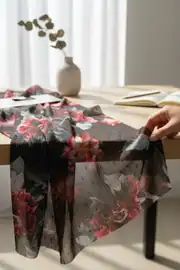
When you hold the fabric, if it feels too loose, lifeless, or loses its shape immediately, its intended use should be reconsidered. Some fabrics are naturally flowy; however, a flowy fabric and a weakly woven fabric are not the same thing.
For example, in designs such as dresses, blouses, and tunics where a flowing appearance is desired, draped fabric models such as Viscose Marocaine Crepe Woven Fabric can be preferred. In this type of fabric, the flow of the fabric, surface balance, and the soft feeling it leaves in the hand should be considered when evaluating quality.
Is Fabric Thickness Enough to Determine Quality?
One of the most common mistakes in fabric selection is the belief that thicker fabric is always higher quality. However, fabric quality is not measured only by thickness. A thin fabric can also be very high quality if it is tightly woven, has a smooth surface, and is suitable for the intended use.
Thickness mainly helps determine which product the fabric is suitable for. Lightweight fabrics may be more appropriate for summer shirts, dresses, or blouses, while firmer fabrics may be preferred for trousers, jackets, or outerwear.
Fabric Weight and Usage Area Should Be Evaluated Together
Fabric weight gives an idea about the heaviness of the fabric. However, a higher fabric weight alone is not a sign of quality. What matters is whether the fabric weight is suitable for the product to be designed.
If a very heavy fabric is used for a light summer dress, the product may not provide the desired movement. Similarly, if a fabric that is too thin is preferred for trousers that need to hold their shape, the product may struggle to maintain its form. Therefore, choosing a high-quality and suitable fabric should be done according to its usage area.

How to Examine the Color and Pattern Quality of Fabric?
Color consistency is an important detail to consider when evaluating fabric quality. The colors should be evenly distributed across the surface, pattern transitions should be smooth, and there should be no faded or stained areas on the fabric.
When purchasing fabric by the meter, especially in patterned products, attention should be paid to whether the pattern continues consistently throughout the fabric. In products to be sewn, pattern shifts can directly affect the final appearance.
Bright Color Is Not Always a Sign of Quality
The vividness of a fabric’s color can create a beautiful first impression; however, what truly matters for quality is whether this color can be preserved during use and care. Using the fabric according to the washing instructions helps the colors remain vibrant for a longer time.
Therefore, when choosing fabric, not only the visual effect but also the fabric’s care recommendations and durability during use should be taken into consideration.
Fabric Flexibility and Recovery Power
Flexibility is not a criterion that should be expected from every fabric; however, it is very important in some product groups. Especially in garments that require movement, the fabric should be able to return to its original form after stretching.
In fabrics containing elastane, recovery performance is one of the important factors affecting quality. If the fabric becomes loose, wavy, or cannot return to its original shape after stretching, the appearance of the product may deteriorate in the long term.
In Which Products Is Flexibility More Important?
Flexibility becomes more important in trousers, skirts, dresses, and body-fitting designs. However, in shirts, jackets, or home textile products, form, durability, and surface appearance may be more important than flexibility.
For this reason, when choosing among different fabric types, the same performance should not be expected from every fabric. The structure of the fabric should be compatible with the needs of the design.
Why Is the Appearance of Fabric After Sewing Important?
The true performance of fabric is often revealed after sewing. High-quality fabric progresses more smoothly during the cutting and sewing process. It does not create bulging, puckering, or deformation along the seam line.
For those involved in professional production, the fabric’s suitability for sewing provides a major advantage. Because the more accurately the fabric is selected, the smoother and higher quality the final product will appear.
Sewing Performance in Draped Fabrics
Draped fabrics provide an elegant appearance in products such as dresses, blouses, and skirts. However, when these fabrics are high quality, the final product stands more balanced after sewing.
Silky Textured Polyester Crepe Woven Fabric is among the fabric options that can be considered for flowing and elegant-looking designs. In this type of fabric, surface appearance, wrinkle resistance, and post-sewing form can be examined in terms of quality.
How Does Fabric Content Affect Quality?
The content of the fabric is one of the main factors determining its feel and durability. Different contents such as cotton, viscose, polyester, linen, lyocell, and cupro provide different properties to the fabric.
Cotton offers a more natural and breathable use, while viscose provides a softer and more draped appearance. Polyester fabrics may offer advantages in terms of durability and shape retention. Materials such as lyocell and cupro stand out with their softness and modern surface feel.
Why Should Fabric Content Information Be Read?
When purchasing fabric by the meter, the content information in the product description should definitely be reviewed. This is because the fabric’s intended use, care method, and expected performance are directly related to its content.
For example, fabrics such as Lyocell Cupro Crepe Woven Fabric can be used in designs that require an elegant surface feel and a draped appearance. In this type of fabric, the touch, surface flow, and suitability for the intended use should be evaluated when determining quality.
How Should Price Be Evaluated When Choosing Quality Fabric?
Price is an important criterion in fabric shopping, but it should not be the only decision-making factor. A cheap fabric may seem advantageous in the short term, but it may cause problems such as loss of shape, pilling, or color fading during use.
When choosing a high-quality and affordable fabric, price and performance should be considered together. The lifespan of the fabric, its appearance after sewing, and the value it will add to the design should all be part of the price evaluation.
Choosing the Right Option Among Affordable Fabric Models
When choosing among affordable fabric models, the first step is to determine which product the fabric will be used for. The same fabric may give very successful results in one design, while it may not be suitable for another product.
Different fabric varieties available at Akbaşlar Kumaş can offer both high-quality and needs-oriented options when evaluated according to their usage area.
Common Problems Seen in Low-Quality Fabrics
Low-quality fabrics often reveal themselves quickly during use. A fabric that looks pleasant at first glance may lose its form after a few uses or washes.
Pilling and Wear
Pilling that forms on the surface of the fabric in a short time reduces the fabric’s usage performance. This becomes especially noticeable in areas that are frequently exposed to friction.
Color Fading
If the color becomes dull in a short time or changes noticeably after washing, this is a negative sign in terms of fabric quality.
Loss of Shape
Loosening, sagging, or deformation around the seams negatively affects the overall appearance of the product.
Difficulty in Sewing
Some fabrics may slip excessively during cutting and sewing, leave needle marks, or cause puckering along the seam line. This creates extra difficulty during the production process.
Which Fabric Is More Suitable for Which Use?
Choosing a high-quality fabric becomes meaningful when the fabric is used in the right area. Not every fabric type is suitable for every product. Therefore, the product group should definitely be taken into account when selecting fabric.
Fabric Selection for Dresses and Blouses
For dresses and blouses, draped, lightweight fabrics that move comfortably on the body can be preferred. Fabrics containing viscose, crepe, satin, and lyocell can offer a stylish appearance in these products.
Fabric Selection for Trousers and Jackets
For products such as trousers and jackets that require more structure, firmer fabrics stand out. In these products, the durability of the fabric and its ability to carry the pattern are important.
Fabric Selection for Home Textiles
In home textiles, the durability, cleanability, and decorative appearance of the fabric are important. Different fabric types can be preferred for tablecloths, curtains, cushion covers, or decorative products depending on the intended use.
Quality Is the Performance a Fabric Shows During Use
Fabric quality is not something that can be understood only at first glance. The texture, surface structure, content information, color balance, flexibility, sewing performance, and suitability for the intended use should all be evaluated together.
When purchasing fabric by the meter, it is important to consider not only the visual appearance of the fabric but also the expectations of use. High-quality fabric gives the design a better appearance, increases comfort during use, and helps the product maintain its shape for a longer time.
Akbaşlar Kumaş offers alternatives for users’ needs with fabric types and high-quality fabric options suitable for different projects. By choosing the right fabric, it is possible to create products that are both aesthetic and durable.
Frequently Asked Questions
How can fabric quality be understood most easily?
Fabric quality can be understood most easily by looking at its texture, surface smoothness, color balance, and the feeling it leaves in the hand. High-quality fabric generally has a more balanced surface, does not lose its shape easily, and offers a structure suitable for its intended use.
What should be considered for quality when buying fabric by the meter?
When buying fabric by the meter, the fabric width, content, thickness, texture, and usage area should be examined. In addition, the care information in the product description and the types of products the fabric is suitable for should also be evaluated.
How to choose high-quality and affordable fabric?
To choose high-quality and affordable fabric, you should not look only at the price, but also at the fabric’s durability, intended use, and appearance after sewing. In terms of price-performance, the right fabric is the one that best suits the product to be designed.
Does thick fabric mean high quality?
No, the thickness of a fabric alone is not a sign of quality. Thin fabrics can also be high quality if they are tightly woven, have a smooth surface, and are suitable for the intended use. What matters is that the fabric has features suitable for the product in which it will be used.
What should be considered when choosing high-quality fabric for a dress?
When choosing fabric for a dress, draped appearance, softness, breathability, and body compatibility are important. Fabrics containing viscose, crepe, satin, and lyocell can often be considered for dress designs.
Click the Link Below to Explore Our Other Blog Posts 👇🏻👇🏻👇🏻